

When working for brands, wholesalers, and serious designers, the stakes are very high. Choosing the wrong textile printing methods can result in huge unwanted losses. Faded jerseys and cracked logos not only ruin customers but also your reputation. Many of the resources provide a list of techniques but no clear path.
The same is not the case with this guide. Task King provides more than basic definitions. This is a step-by-step framework to choose the best fabric printing method. Here you will learn with a clear comparison and practical specifications. This will let you transform technical complexity with confidence.
Textile Printing Methods at a Glance: A Decision Matrix

If you have lost hope after trying different printing methods. The same is the case with many others. It’s easy to get distracted due to long technical descriptions. This makes it hard to compare.
Task King has created a simple matrix below. With this cheat sheet, you can analyze the top methods for your custom sports uniforms. You will learn which method is best for your fabric. The order size and the type of designs they are best suited for. A quick overview to limit your choice before going into details.
Textile Printing Method Comparison Table
| Method | Best For This Fabric | Best Order Size | Perfect For This Design Style | How It Feels? |
| Screen Printing | Cotton, polyester blends | Large runs (250+ pieces) | Bold logos, simple graphics, spot colors | A soft, thin layer on the fabric |
| Direct-to-Garment (DTG) | Primarily cotton | Small runs (1-50 pieces) | Full-color photos, complex artwork | Like part of the fabric itself |
| Dye Sublimation | White or light polyester | Medium to large runs | All-over patterns, vibrant gradients | Extremely soft, with no added feel |
| Heat Transfer (Vinyl) | Most fabrics (via a layer) | Small to medium runs | Lettering, team logos, simple shapes | A smooth, slightly plastic-like layer |
| Digital Printing (on Fabric Rolls) | Silk, polyester, cotton | Small to medium runs | High-detail patterns with unlimited colors | Very soft, minimal texture |
The Deep Dive into 5 Textile Printing Methods
Let’s take a closer look and understand the top textile printing methods. Here you will learn about every individual method. All essential methods from start to finish to choose the best one for your needs.
1. Screen Printing: The Classic Workhorse

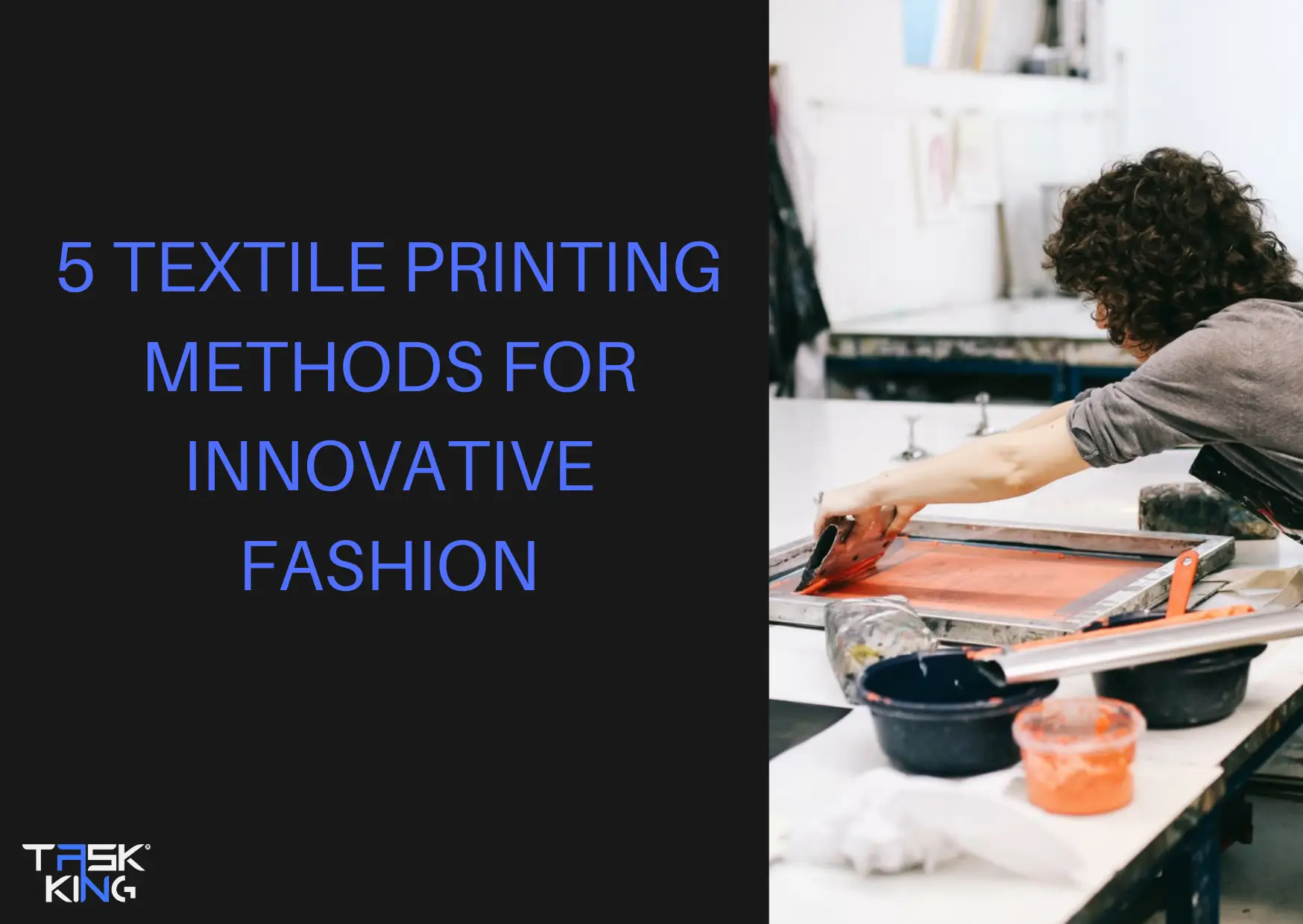
Screen printing is the most traditional method in the t-shirt world. A go-to method for bold and vibrant graphics.
How does it work? Ink is pushed through a fine mesh stencil onto the fabric. A separate utensil for every color is used. The process is very precise, like a screen-painting tool.
The Real Pros & Cons:
- 👍 Key Advantages: Very low-cost option for bulk orders. Provides super bright colors and visibility. Durable print quality that lasts many washes.
- 👎 Key Drawbacks: Requires time and a high cost for setup. This can make it not suitable for small orders as the cost increases. Also, photo designs with lots of colors and blends cannot be printed. Each color needs a separate stencil.
- 🌍 Environmental Impact: The method uses plastic inks not good for the environment. The process can leave harmful chemical and water waste.
- ⚙️ Complex Setup: You need a separate screen for every color. This take huge amount of time and skills also.
The Perfect Project:
- Printing 300+ cotton t-shirts for a company or an event.
- A simple, bold logo with 1-4 solid colors.
- Sportswear, like a baseball outfit or workwear, needs to survive heavy use and frequent washing.
“Before You Talk to a Printer”:
- Have your final design ready.
- Know exactly how many colors are in your design (they will need one screen per color).
- Ask them: “Do you use plastisol or water-based inks?” and “What is the minimum order quantity for screen printing?”
2. Direct-to-Garment (DTG): The Digital Artist

This method is like using a big-sized inkjet printer for fabric. An ideal option when you want a photorealistic design. Also good for a limited number of shirts with less setup.
How Does It Work? A specialized inkjet printer sprays water-based ink onto the fabric. Same as printing a paper, the picture is printed on a t-shirt.
The Real Pros & Cons:
- 👍 Key Advantages: Has no setup fees or needs for a screen. Perfect for full-color photos and complex art design. The only real method for printing a single unique item.
- 👎 Key Drawbacks: This method is expensive compared to screen printing for bulk orders. Provide good quality 100% cotton fabric. But ink can feel a little stiffer on dark fabrics.
- 🌍 Environmental Impact: This method is very suitable for the atmosphere. Uses water-based inks and produces almost zero waste as there are no screens to clean.
- ⚙️ Setup Complexity: No extra or big setup needed. The printer works from a digital file. Different designs on every shirt can be created.
The Perfect Project:
- A custom photo gift or a single prototype or sample of your design.
- A small batch (under 50 pieces) of shirts with a detailed, colorful artwork.
- Printing on 100% cotton or high-cotton blend garments.
- Good for running or cycling sports uniforms.
“Before You Talk to a Printer”:
- Have a high-resolution digital file (like a PNG or TIFF) with a white background.
- Know your garment’s fabric content (aim for mostly cotton).
- Ask them: “Do you pre-treat dark garments, and is that cost included?”
3. Dye Sublimation: The Color Champion for Synthetics

Dye sublimation is no less than magic. It turns solid dye into a gas that gets absorbed in polyester fabrics. This creates strong and vibrant all-over prints and designs. High-durable never cracks or fades. The color becomes material itself.
How Does It Work? In the first step design is printed on a special kind of paper. Then, with a special heating press, turn that design into a gas that merges with the fabric’s fiber.
The Real Pros & Cons:
- 👍 Key Advantages: The print never cracks, fades, or crumbles as colors become part of the fabric. Very good option for bright all-over prints. Perfect for soccer sports uniforms and super soft fabrics.
- 👎 Key Drawbacks: Only suitable for polyester fabric or polymer-coated items. You can only print on white or very light-colored fabric. Not good for dark colors.
- 🌍 Environmental Impact: Mixed. No physical waste or ink is left to dispose of. The process uses heat and specialized dyes.
- ⚙️ Setup Complexity: Medium. Requires a heat press and specific dye-sublimation paper and inks. The process is technical to get perfect.
The Perfect Project:
- Sportswear, swimwear, or flags made from polyester, like volleyball outfits.
- Items needing vibrant, all-over patterns (like team uniforms or fashion leggings).
- Mugs, phone cases, or other coated items (this is the same process).
“Before You Talk to a Printer”:
- Confirm your item is at least 80% polyester or has a special polymer coating.
- Your design file should be high-resolution and in CMYK color mode.
- Ask them: “What is your maximum print area for all-over sublimation?”
4. Heat Transfer Vinyl (HTV): The Crisp Cut-Out Expert

This method works on cutting designs from a thin, colored plastic sheet. Then pressed with heat onto the fabric. This method is ideal for creating crisp and shiny logos and lettering. You can feel a distinct layer of printing on top of the material.
How Does It Work?
A machine first cuts shapes out of a thin, colored vinyl sheet of plastic. This is then pressed with heat onto the fabric to stick.
The Real Pros & Cons:
- 👍 Key Advantages: Creates designs that are crisp, shiny, and glittery. Good method for simple-colored text and logos.
- 👎 Key Drawbacks: The vinyl remains on the top of the fabric. It feels like a plastic layer and can crack over time. Highly complex designs are not possible to print.
- 🌍 Environmental Impact: Poor. The material used is HTV plastic. It is not biodegradable and can release fumes when heated.
- ⚙️ Setup Complexity: Low to Medium. A cutting plotter and a heat press are needed. With software, designing simple cut-outs is easy.
The Perfect Project:
- A small batch of team jerseys with player names and numbers.
- Adding a single, bold logo to hats or tote bags.
- DIY projects or school club shirts with simple designs.
- Good for customer lettering of hoodies for sports.
“Before You Talk to a Printer”:
- Have a vector file (like an AI or EPS) for your design, as it needs to be cut out cleanly.
- Know what color of vinyl you want (they often have swatch books).
- Ask them: “What type of vinyl do you use, and what is its expected wash durability?”
5. Digital Fabric Printing: The Designer’s Dream for Rolls

With the use of a huge high-tech inkjet system, designs are printed onto rolls of material. This method provides unlimited colors and sharp details. This is a unique choice for small-run fashion fabrics or photorealistic patterns.
How Does It Work? A giant industrial printer with special dyes is used. It prints directly onto a roll of fabric, same as a home printer. But it prints meters and meters of fabric.
The Real Pros & Cons:
- 👍 Key Advantages: Offers unlimited colors, perfect for photorealistic prints or complex patterns. You can print even a small piece of fabric you need. The setup requires very low cost.
- 👎 Key Drawbacks: The cost per meter is higher compared to other roll printing methods. The dyes may be less vibrant on very dark fabrics. Also, printing large volumes can take time.
- 🌍 Environmental Impact: Generally better. A print-on-demand process that reduces waste fabric. Also, nature-friendly, as many systems use water-based inks.
- ⚙️ Setup Complexity: Low. The main setup is calibrating the printer and preparing the digital file. No physical screens or cylinders.
The Perfect Project:
- A fashion designer’s sample collection needs a unique, small-run printed fabric.
- Home decor items like custom curtains or upholstery with a detailed pattern.
- Printing on delicate fabrics like silk or rayon that can’t handle heavy screens.
“Before You Talk to a Printer”:
- Have a very high-resolution, repeating pattern file if needed.
- Know the exact type, weight, and width of fabric you want to print on.
- Ask them: “What is the color fastness (fading resistance) of your inks, especially for home decor fabrics?”
Still Unsure? Follow Our Step-by-Step Decision Guide
Finding the best textile printing method is not about a single best one. But it’s about finding the best match for your needs. The following step-by-step guide will solve your problem.
Step 1: What is your Main Fabric Type?
The top of the list question is what kind of fabric it is.
- For natural fibers like cotton and linen, screen printing, DTG, and HTV. These methods work well on cotton.
- Whereas for polyester and nylon, Dye Sublimation creates a natural bond. Digital fabric Printing is also well-suited.
- When you have blended fabric, both screen printing and heat transfer vinyl work well. Check with your vendor for the best type.
Step 2: How many items are you printing?
The quantity you want is an important factor in cost estimation.
- For Small Orders (1 to 50 items): For such a small quantity, Direct-to-Garment (DTG) and Heat Transfer Vinyl are best. They have little or zero setup cost. So, making even one shirt is not expensive.
- Bulk Order (above 50 items): For a large quantity, Screen Printing and Dye Sublimation. They are a great choice because their setup cost is high but lower with rising quantity.
Step 3: What does your design look like?
What kind of design do you want is what takes you in the right direction.
- Simple & Bold: You want a logo, some text, or 1-4 colors. Screen printing and Heat Transfer Vinyl are perfect for the job. They make colors shine and edges sharp.
- Complex & Colorful: For this kind of work, DTG, Dye Sublimation, and Digital Fabric Printing are the best choices. They can print more than one color.
Step 4: What is your top priority?
What kind of results do you want from the printing method?
- Low cost: If you want a low cost per piece, screen printing is the winner. But for small orders, choose between DTG and Heat Transfer.
- High-Quality: For cotton shirts, screen printing is always the best. For polyester, dye sublimation is the most durable.
- Fast Pace Work: Direct-to-Garment (DTG) provides the fastest work speed. It needs no physical setup a few-color items can be done easily.
Quick-Reference Scenario Guide
These quick scenarios provide a fast, scannable way to identify your situation and find the recommended method.
1. Screen Printing is your best match if: You need 300+ cotton tees with a bold, simple logo, and your top priority is the lowest cost per shirt.
2. Direct-to-Garment (DTG) is your best match if: You’re printing 20 cotton hoodies with a full-color photo and need a fast, detailed print with no setup hassle.
3. Dye Sublimation is your best match if: You’re producing 100 polyester jerseys with a vibrant, all-over pattern and value maximum durability and a soft fabric feel above all.
4. Heat Transfer Vinyl is your best match if:You’re making50 team caps or bagswith asingle-color name or emblemand want acrisp, shiny finish.
5.Digital Fabric Printing is your best match if: You’re a designer creating a unique, small-run performance fabric with a complex, seamless pattern for athletic wear.
From Decision to Action: The Task King Partner for Brands & Wholesalers
The real challenge for brands, and especially for startups, is not to learn about printing methods. But to establish a smooth system within their budget that provides their gear on time. This is where Task King becomes your strategic partner.
We have experience and a team to handle the complexities of custom uniform manufacturing. Not only uniforms for lacrosse or rugby teams. But also, items like training shorts and other items like tracking pantsare manufactured in high quality. With all customization from fabric selection to printing methods, we are equipped to handle everything.
Conclusion
When there are lots of printing methods in the market and tons of information, choosing one becomes very difficult. Always remember that what’s important is not a single method but what your needs are. Every printing method is best when used where it is best suited. Also, an experienced adviser, whether a printing vendor or a product supplier, can also solve many of your problems. So, gather your knowledge and consult with an expert to choose a proper method for your needs.